Debunking Misconceptions: Common Myths People Still Believe About Alzheimer’s and Dementia Care
When a loved one begins showing signs of Alzheimer’s or another form of dementia, it can feel like the ground shifts under your feet. Families often face difficult questions about safety, comfort, and what the future may hold. It’s completely natural to feel unsure or even fearful when thinking about memory care. Many people picture something far different from what it truly is today.
The truth is that memory care has changed dramatically over the years. What once might have seemed clinical or confining is now warm, thoughtful, and deeply person-centered. Yet despite this progress, many outdated ideas still linger. Some families believe that residents lose their independence entirely, that the environment feels cold, or that loved ones no longer get to stay involved.
This article aims to clear up those myths and replace worry with understanding. Let’s take a closer look at the most common misconceptions and the reality behind them.
Myth 1: “People in Memory Care Lose All Autonomy”
People often think of a move to a memory care community as a loss of autonomy. In reality, this is not the case. The goal of quality memory care programs is to preserve autonomy in an environment where it is safe to be autonomous, while providing the appropriate level of support to allow each resident to maintain their ability to do as much as possible for as long as possible.
This balance is achieved by using thoughtful design and routines to support the caregivers in providing reminders to residents as needed, rather than doing all the work for them. Residents might be guided through their morning routine but are allowed to continue with some of the activities that give them a sense of purpose and make them feel at home, such as choosing what they want to wear, styling their own hair, helping with setting the table, watering plants, folding towels, etc.
Autonomy looks different for each person. One resident may define autonomy as being able to walk to the dining area using some light support, another as an opportunity to participate in their favorite daily activity of making art, or yet another as simply the freedom to choose the music for their meal. The key issue here is that the person remains involved in activities that are both meaningful to them and within reach.
Myth 2: “Memory Care Feels Cold or Clinical”
This myth likely comes from the past, when senior care environments were often built around medical efficiency instead of emotional comfort. Modern memory care communities are the complete opposite. They are intentionally designed to feel warm, familiar, and calming.
Hallways and rooms are designed to be calming and less confusing with the use of softer, natural colors to produce an environment of serenity. The lighting in the space is also consistently low-key to avoid creating glare or shadows that may confuse or disorient individuals. These living spaces are designed to feel like comfortable home environments with comfy furniture, uplifting artwork, and décor that will help stimulate memory recall and provide comfort to residents.
In addition to secure indoor spaces, many memory care neighborhoods also have safe outdoor areas such as courtyards, gardens, or walking paths that provide opportunities for residents to safely experience the outdoors.
Not only do these types of areas support physical wellness, but they can also help reduce anxiety and stress.
Myth 3: “Residents Don’t Stay Active or Engaged”
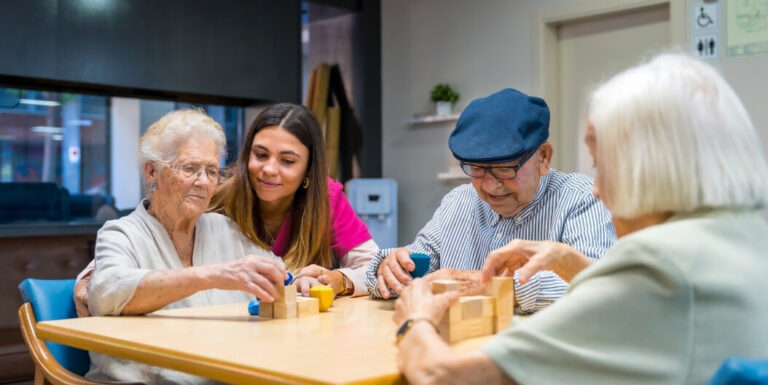
Some families worry that a loved one in memory care will spend most of the day sitting quietly or disengaged. In truth, purposeful activity is one of the most important parts of dementia support. Engagement keeps the mind active, boosts mood, and provides a sense of identity and joy.
Here’s what that can look like day-to-day:
- Music and art programs that spark memories, encourage creativity, and provide comfort.
- Group activities that include light exercise, games, or laughter-filled social time.
- Daily routines that create structure, familiarity, and calm.
These activities are each developed to allow residents to connect on their own level. A previous gardener may find joy in tending potted plants or smelling herbs as part of an activity session. A person who previously enjoyed cooking can assist with stirring cookie dough prior to baking cookies or setting out napkins before meal service. Engaging for short periods allows residents to stay emotionally connected to themselves.
Staff also realize that stimulation does not have to include constant physical movement. Many quiet moments (such as listening to favorite music or going through a family photo album) can be very valuable to them. It’s not about filling every moment of their day, it’s about providing opportunities for comfort, confidence, and joy throughout the day.
Myth 4: “Memory Care Is the Same as Assisted Living”
It’s understandable that people sometimes confuse these two options. Both assisted living and memory care offer a home, food, and some assistance; they just do so very differently when it comes to what type of support they are offering to their residents.
Assisted living typically works best for older adults who need a little bit of support on a day-to-day basis (like getting dressed, taking their meds, and so on) but can otherwise care for themselves independently. On the other hand, memory care is specifically designed to assist residents diagnosed with Alzheimer’s disease and/or other forms of dementia who require additional levels of care.
In memory care settings, caregivers are given additional training in areas of communication, managing behaviors, and specific aspects of dementia that relate to safety. Caregivers learn to redirect anxious behaviors, respond calmly to confused behaviors, and promote participation using positive verbal cues. The spaces used for memory care are also safer and more predictable; therefore, they eliminate or reduce the risk of wandering by the residents.
Myth 5: “Families Can’t Stay Involved After Move-In”
This is one of the hardest misconceptions for families to let go of, mostly because it’s rooted in love and concern. Many people fear that once their loved one moves into memory care, they’ll no longer be part of daily life. The truth is, family involvement is not only welcomed, it’s encouraged.
Good quality memory care communities want and encourage family members to continue participating in daily routine and are inviting them to visit regularly and to eat with their loved ones or even to join in with some activities (gardening, crafts, singing etc.); many communities also have family days/nights, educational seminars, holidays events that include all members of the family.
Another key element in delivering high-quality care is open communication with families. Family members are informed about their family member’s daily routine, mood, etc. along with new developments/milestones in their lives. Many times, family members will also be provided with information that can be used during a visit, or on how they can continue to connect with their family member despite the effects of declining memory.
The relationship between family members and the care team helps to provide continuity of familiar love and connection for the resident.
How Quality Memory Care Really Supports Residents
When you look past the myths, the real picture of memory care comes into focus, and it’s a compassionate one.
- Residents are supported with patience, respect, and kindness.
- Each day follows a familiar rhythm that brings comfort and security.
- Activities are purposeful, designed to spark memory and joy.
- Teams are specially trained to recognize emotional needs and respond with understanding.
Memory care isn’t about what someone has lost; it’s about nurturing what remains. It celebrates individuality while providing safety and predictability. Residents are not defined by their diagnosis; they’re valued for who they are and what still brings them happiness.
The type of care environment provided will assist both the individual with dementia and alleviate a great deal of anxiety and worry for the family members of the individual with dementia. When you know that your loved one is being cared for in an environment where caregivers have a complete understanding of the individual’s memory loss, a significant burden of worry is lifted off your shoulders.
Questions Families Can Ask When Touring a Memory Care Community
If you’re exploring memory care options, asking the right questions can help you see what sets one community apart from another:
- “How do you personalize activities for each resident?”
- “What kind of training does your care staff receive?”
- “How do you support family involvement?”
- “What safety features are in place without feeling restrictive?”
- “Can residents enjoy outdoor spaces safely?”
These aren’t questions meant to test or challenge; they open conversations. The goal is to understand how a community’s approach supports comfort, security, and emotional well-being for your loved one.
Still Wondering if Memory Care Is Right for Your Senior Loved One With Dementia? Come Discover the Truth About Memory Care at Brayden Park
At Brayden Park Assisted Living & Memory Care, memory care feels less like a program and more like a neighborhood designed with love and purpose. Every detail, from the soothing colors on the walls to the secure walking paths outdoors, is created to make residents feel comfortable, confident, and at home. Here, care teams receive specialized training to understand the unique needs of individuals living with Alzheimer’s or other forms of dementia.
If you’re considering memory care for someone you love, remember that it’s okay to ask questions, visit in person, and take your time. Seeing the environment firsthand often changes everything; it replaces worry with trust.
Come see how Brayden Park Memory Care supports comfort, safety, and peace of mind, every step of the way. Schedule a tour today!